Never miss a post.
You're Still With Him? Why Abuse Victims Don't Just Leave
- Sarah McDugal
- Abuse + Domestic Violence
If it was really so bad, why didn't she just leave?
It can't have been that abusive, or she would have said something, right?
If that really happened, why didn't she call the police?
Advocates and survivors hear victim-blaming like this from church leaders and onlookers all the time.
So I asked Officer Brian Bennett, instructor at South Carolina's Criminal Justice Academy, to explain some of the psychological reasons why abuse victims find it hard to leave.
This is what he had to say:
There are many reasons why survivors of domestic violence find it hard to leave their abuser. There are almost as many reasons for staying, as there are victims who are targeted for abuse.
For some, the reasons are situational.
For others it can be emotional.
For nearly everyone -- it revolves around fear.
Sometimes the only person who can understand the level of fear experienced by domestic violence victims, is the person who has actually lived it.
So how do we help those who haven't experienced it, to understand the level of fear? This is a story I share with my police cadets:
Years ago there was a documentary on military prisoners of war (POWs). The program interviewed and explored the lives of surviving POW’s from World War II, the Korean War and the Vietnam War. Depending on the soldiers' job, they may have to attend what is called SERE (Survival, Evasion, Resistance and Escape) training. Millions of government dollars are spent teaching soldiers how to escape, survive and evade capture if faced with this type of danger.
One question was posed to each POW that was interviewed: “Did you ever try to escape?”
The overwhelming majority of surviving POW’s never escaped on their own. Instead, they were freed at the end of the conflict.

When asked why they didn't attempt to escape, the POW’s overwhelmingly answered one of two ways:
"I saw opportunities where I could escape but I was worried about what would happen to me if I got caught."
"I saw chances to escape and felt pretty certain I could make it to freedom, however, I was worried about how my fellow prisoners would have to pay for what I did."
These two consistent answers were why military personnel with millions of dollars in SERE training did NOT leave. Because of FEAR!
When I train police cadets in issues related to domestic violence, I ask them this:
If these soldiers, who had completed the best military training, could not bring themselves to leave because of fear -- how can we expect domestic violence victims to make a different choice when they are essentially prisoners in their own homes?
Power and control achieved through fear, mind games, threats and violence, are tools capable of paralyzing the person targeted for abuse.
Domestic abuse survivors often lack the support they need to make safe escape decisions -- which is significantly less than the support and training provided to military personnel!
It is important for those supporting victims to avoid bring critical or judgmental toward victims who may refuse to leave abusive relationships, and instead consider the level of fear that causes them to act against their own best interests.
Officer Brian Bennett has 20 years of law enforcement experience and serves as an instructor at the South Carolina Criminal Justice Academy. He is skilled in various law enforcement disciplines and is court qualified as an expert in police training. He has also served as co-chairman of a division of the Governor’s Domestic Violence Task Force. Areas of expertise include Domestic Violence, Vulnerable Adult Victimization and Strangulation. He can be reached at Bkbennett@sccja.sc.gov.
Does someone you know need help to find safety from abuse? Call the National Domestic Violence Hotline at 1-800-799-SAFE.
Support Group>>WILD TraumaMamas: Because Momming After Trauma isn't for the Faint of Heart
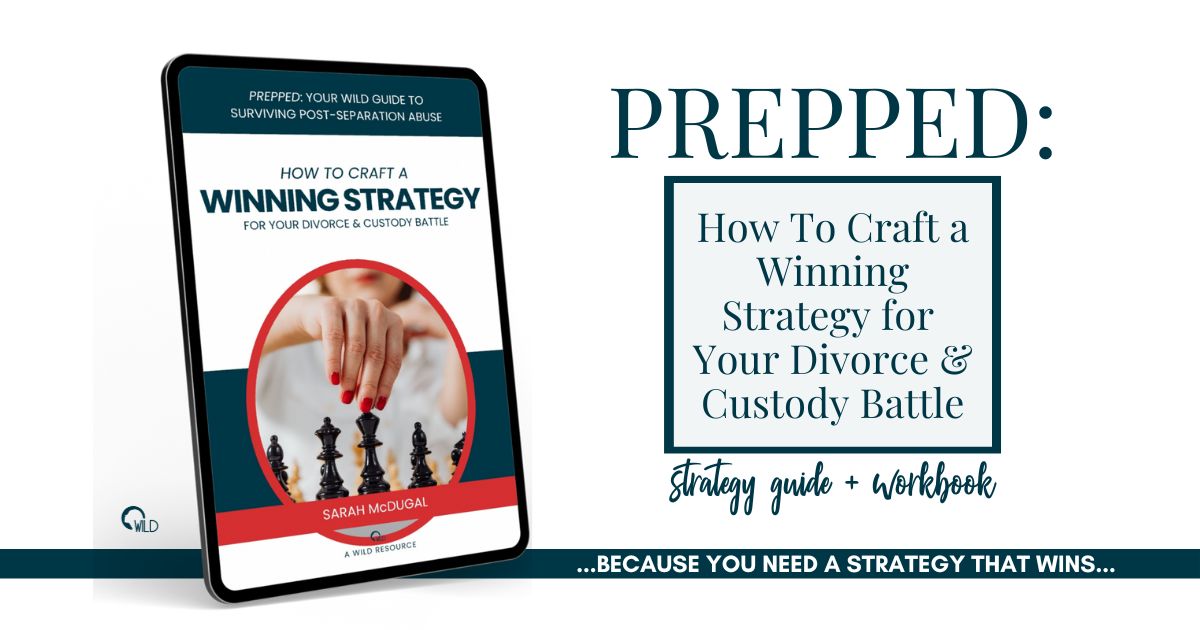
Are you struggling to survive post-separation abuse, or worried the abuse won’t stop when you leave?
You need practical, proven tools to survive court. That’s why we’ve created PREPPED - a collection of proven tools for surviving post-separation and litigation abuse:
6 Ways to Find the Best Divorce Attorney to Save Your Kids (eBook)
How to NOT Piss Off Your Judge: Advice from the Bench in Divorce & Custody Court (Toolkit)
How to Craft a Winning Strategy for Your Divorce & Custody Battle (Guide + Workbook)
107 Questions to Ask Before You Hire a Divorce & Custody Attorney (Workbook)
the BINDER | Your Complete Evidence Organization System for Family Court
Are you feeling re-traumatized after seeking help from your church, community, or legal system?
Assess how safe or unsafe your resources have been so far. Learn what makes safe, healing support as you go forward.
Follow on Facebook and Instagram.
Subscribe on YouTube for hundreds of free videos on abuse recovery.
Browse my Best Books List to find safe resources on betrayal trauma, healing, relationships, and more!
Want more articles like this?
Get new posts straight to your inbox!